As T20 cricket continues to grow and young players are exposed to the shorter format earlier in their development, an important question remains: how valuable is red-ball cricket to the development of the modern batter?
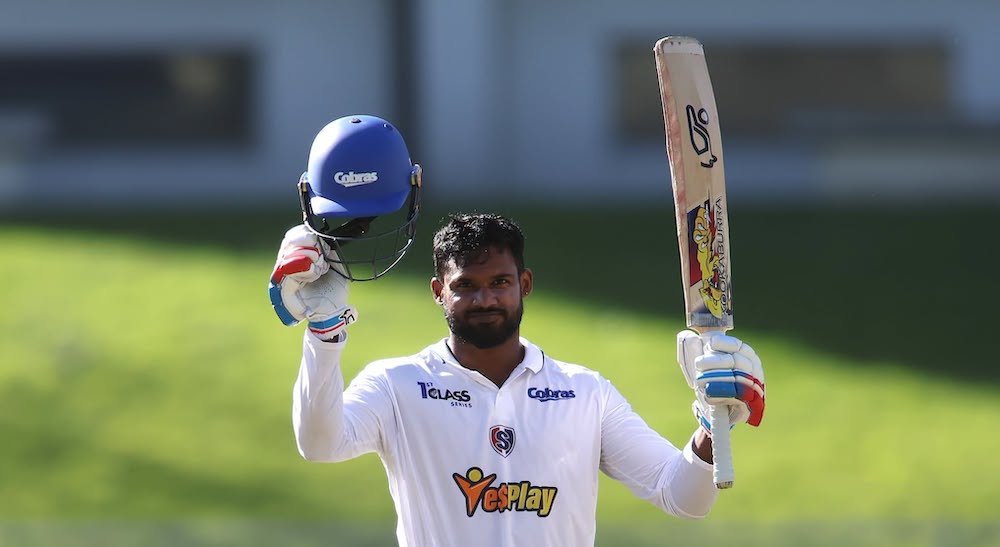
For Western Province batter Jiveshan Pillay, the relationship between the formats is clear.
Rather than viewing red-ball and T20 cricket as completely different disciplines, Pillay believes the skills developed in the longer format provide a foundation that can make adapting to T20 cricket easier.
“I think the skills needed for red-ball cricket translate to T20 cricket.”
It is a philosophy that shapes both the way he prepares and how he approaches moving between formats.
Building the foundation through red-ball cricket
The modern batter is expected to be adaptable.
One week could require patience, leaving the ball and building an innings over several hours. The next could demand immediate intent and the ability to find boundaries from the beginning.
But Pillay does not believe preparing for one necessarily means sacrificing the other.
For him, getting his red-ball technique in order provides a platform from which he can expand his game.
“I think it is a bit of a switch, but I think that if your red-ball game or technique is in order, I think it’s an easier transition.
“I think it’s a bit difficult the other way around because sometimes you can get in bad habits with T20 cricket, so I think it’s a bit of an easier transition.”
The fundamental skills remain similar.
What changes is the intent with which they are applied.
“I just think it’s, you know, you look to score more and have a higher sort of intent.
“Yeah, but I think it’s very similar.”
Why four-day cricket still matters
Pillay’s appreciation for the longer format extends beyond what it can do for his T20 game.
There is something about the nature of four-day cricket itself that appeals to him.
“I think today’s a good example of why I think the longer format is still probably the best game, because things can happen.
“You work really hard for four days to get a result in the last 15 minutes.”
That is part of what makes red-ball cricket unique.
A player can spend days contributing towards a position that may only produce a result in the closing moments of a match.
For a batter, that demands concentration, patience and an understanding that the context of an innings can continually change.
Those are qualities that can remain useful regardless of the format being played.
Learning from Test cricketers
One of the benefits of playing domestic cricket at Western Province is the opportunity to share a dressing room with players who have experienced the highest level.
Pillay highlighted David Bedingham, Kyle Verreynne and Tony de Zorzi as players he has been able to learn from.
“It’s good having guys like Bedingham and Verreynne. And sometimes when Tony de Zorzi is back, they help us a lot, you know, learning from guys that play Test cricket, how to prepare and yeah, they definitely help.”
But it isn’t necessarily one particular technical lesson that has stood out.
It is their attention to detail.
“I just think it’s like the attention to detail when they do train.
“So they’re like, you know, if we play against a left-arm seamer, they would practice left-arm seam more and practice like their scoring options, etc.”
Preparation also changes according to the conditions they expect to encounter.
“And it’s a big thing, but how they would bat differently in different conditions.
“So I think that’s I’ve learned a lot from them about that stuff.”
That approach provides an insight into what separates simply practising from preparing for a specific challenge.
The session is built around what a player expects to face.
Does T20 cricket require completely different training?
With the range of shots now associated with T20 batting, it would be easy to assume that Pillay completely changes his training when moving into the shortest format.
He doesn’t.
“I don’t actually do anything different.
“I think if anything, I would probably do a bit of range hitting just to get your swing right.
“But I think that’s the only different thing that I would do.”
It reinforces his belief that the formats remain connected.
The foundation does not disappear when the coloured clothing comes out. Instead, the batter adjusts how aggressively those skills are used.
Keeping ‘the main thing’ the main thing
Pillay’s development at Western Province has also involved adjusting to a new environment away from cricket.
Moving to Cape Town brought a different city, different surroundings and plenty of opportunities to switch off from the game.
He has embraced some of them.
“I think I’ve done all the touristy things, like Table Mountain and stuff like that. So that’s been cool.
“I’ve recently started surfing, which I’m pretty kak at, but it’s really fun.”
Having interests away from cricket provides an opportunity to relax, but Pillay remains clear about why he is in Cape Town.
“I think it’s like you want to play for Province and the Cobras and you want to perform well and contribute.
“So I think that’s a driving factor.
“I think it’s great that you have all these things that you can do in your downtime to relax and stuff like that.
“But I think the main thing is still the main thing, which is to score runs and win games for the Cobras.”
That balance between switching off and maintaining focus is another part of life as a professional cricketer.
One game, different demands
The growth of T20 cricket has inevitably changed the way young batters think about the game.
There are more attacking options, greater emphasis on scoring rates and different opportunities available to professional players.
But Pillay’s approach provides another perspective.
Rather than developing a completely separate game for each format, establish a strong foundation first.
Learn how to build an innings. Learn how to adapt to different conditions. Understand your scoring options. Prepare specifically for the bowlers you are likely to face.
Then, when T20 cricket arrives, increase the intent.
For Pillay, the transition from red-ball cricket to T20 cricket is not about becoming a completely different batter.
It is about taking the same foundation and adapting it to a different challenge.
Photo credit: WP Cobras
Want to experience South African cricket beyond the headlines?
Every Friday, CFM takes you deeper into the stories, conversations and decisions shaping South African cricket.
Get the CFM Friday Edition free in your inbox.
Sign up using the form below 👇