It is very tempting to break into that famous Tina Turner song right now. My personal feelings about cricket grounds around South Africa make it difficult for me to be objective about St. George’s Park, Boland Park and Newlands Cricket Ground.
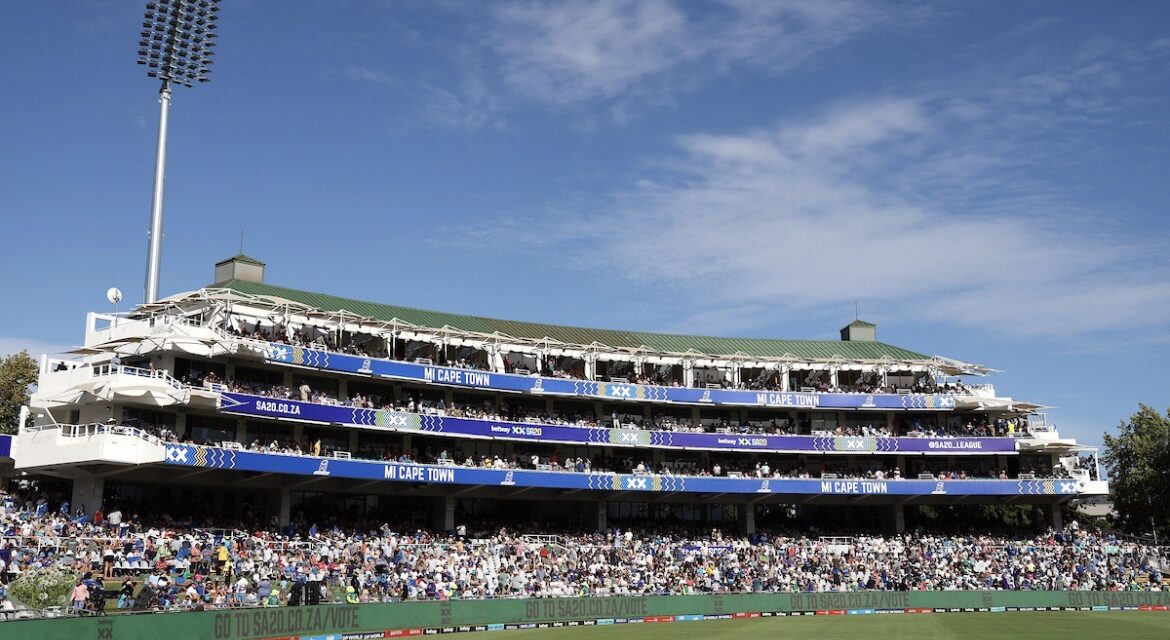
All three hold special places in my heart, for different reasons. Today we are back at Newlands for the crucial (in the context of this season) match for MICT against neighbours Paarl Royals. I think all the clichés can be used, like “must win”, “season-defining”, “crunch encounter”, last chance saloon” to name a few.
Newlands will be as full as it can be for the clash. There are many that regard this ground as the home of cricket in South Africa, a claim that St. George’s Park may challenge. The Gqeberha ground hosted the first ever Test Match in South Africa on the 12th March 1889, with Newlands hosting the second just 13 days later.
Founded in the shadow of Table Mountain in 1888 by the Western Province Cricket Club, only the 32nd Test Match ever started on that Monday in 1889. The home side were dominated by England, losing by an innings and 202 runs.
The patrons way back then, some 136 years ago, would find today’s Newlands to be something out of science fiction. It has new LED floodlights so you can have daylight at night, grandstands, an office park and an electronic scoreboard where you can actually see the action replayed almost instantly. Even the umpires are helped by some magic technology when they make their decisions.
Back then there would have been horses and carts, and the rail link to Newlands estate opened in 1864, so perhaps some of the spectators for that first Test Match made their way by train from Cape Town or Salt River. My interviews with the fans to get their opinions are a thing of the past, and there is consensus from those I speak to.
The mountain is the single most important feature that makes the ground special. It’s not the physical characteristics of the ground that evoke the most enthusiasm. There is the atmosphere or the “vibe”, which is perhaps best experienced on the grass banks under the Oaks, where the afternoon sun bakes down on the closely-packed fans. The sense of history is also important. There are many that have been coming here for as long as they can remember, and are quick to mention if they have ever played here. There are some younger fans that are here for the first time, perhaps starting a life-long love affair with this wonderful game and this iconic venue.
Pushed on whether they would call this the home of cricket in South Africa, home town bias wins the day. The purists amongst the fans are not too happy that there is no Test Match here this season, but they are happy there is cricket, and are eager to see MICT get over the line in the Cape Derby.
The media centre is at the Northern end of the ground, and offers great views of the field, the ground and the scenery from its 4th floor vantage point. It has recently been revamped and is one of the facilities at the ground that is ready for the very important Cricket World Cup that will be played in this country in the latter part of next year.
That tournament will be played by men in coloured clothing, using two white cricket balls, on a pitch that will be dropped in by a mobile crane. It will be watched by fans at the ground in concrete stands, who will have arrived in cars. The teams that participate will have flown in to South Africa on aeroplanes. All around the world millions of people will watch the spectacle on television or on some form of mobile device.
In 1889 pretty much all that I have described above did not exist, except for the piece of land on which cricket is still played.
When the lights go out this evening, the last person leaves and all the stories on today’s game are published, a rounded area of grass will remain, under the shadow of the mountain, much like it did many moons ago, in a very different world.