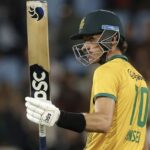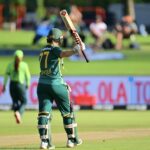

The SA20 delivered a final fit for the ages on a glorious January evening at Newlands. The brilliance of Brevis trumped by Tristan, Marco’s maiden overcoming the mastery of Maharaj.
As with life itself, today is the first day of our life after the SA20. The Orange Army marches on, the stories are posted and our focus shifts to the next big thing, the fast-approaching T20 World Cup in India and Sri Lanka. What can we learn from the Proteas SA20 class of 2026?
Aiden Markram B+
Captain Markram gets a solid B+.
Batting: 7 innings, 309 runs at 44.14, 1 hundred and 1 fifty, striking at 152.97.
Bowling: 7 overs, 65 runs, 1 wicket at 65, 9.28 RPO.
Aiden’s batting form at the beginning of the tournament was a little disconcerting. The perplexing part perhaps that he batted at 5,4,4 and 4 before opening in the last 3 matches, scoring 25, 66 and 108 respectively. With coach Shukri Conrad making it clear that Markram will be opening in the World Cup, these last performances with the bat are very encouraging. In the context of the withdrawal of Donovan Ferreira, it would have been good to have seen Aiden turn his arm over a little more, but we know he is more than capable with ball in hand. Brilliant in the field as always, the captain is looking good.
Quinton de Kock A
Keeper Quinny gets a well-deserved A
Batting: 11 innings, 390 runs at 39.00, 4 fifties, striking at 148.85. 15 catches and 3 stumpings
Named as the player of the tournament, de Kock’s early form was outstanding, and his clean hitting reminded many of what they have missed in the Proteas line-up. His natural ability is almost unmatched, but perhaps the most pleasing aspect of his performances was his hunger for runs. He looks like he is loving his cricket at the moment and that is a very good sign for the Proteas.
Dewald Brevis A+
The R16.5m man gets the highest pass mark.
Batting: 11 innings, 370 runs at 41.11, 1 hundred and 2 fifties, striking at 156.11
Dewald delivered when it mattered the most for the Pretoria Capitals. Struggling to make significant contributions, except perhaps for 2 important 30’s against MICT, he came good when it mattered the most. With his team at 7/5 against JSK on a devilish Wanderers pitch, his 53 was an innings of immense character, and the one that may have redefined his career at this level. Brilliant in the first qualifier and majestic in the final, he could have done little more to get his team to their first title. Sadly, for him it was not meant to be. A more mature and dangerous Brevis should go to the World Cup brimming in confidence.
Ryan Rickelton B
Early season form gets Ricks a decent B.
Batting: 9 Innings, 337 runs at 42.12, 2 hundreds, striking at 152.97. 8 catches and 1 stumping.
Ryan’s brilliant 113 in the first match at Newlands was not enough to see MICT over the line. It was a statement from the classy left-hander that he should not be forgotten when it came to the T20 World Cup. He followed this up with a couple of 30’s, before an equally good 113* at the Wanderers. The only player to score 2 hundreds in an SA20 season, Ricks was the obvious choice when Tony de Zorzi was ruled out of the squad due to injury. He might be a little concerned that in his last 6 knocks, apart from the 113*, he failed to get past 17. The key for him and the Proteas is that he will be on the plane to India, and we can expect him to come good for the men in green and gold.
Jason Smith F
A chastening season for Jason means he fails to get through the SA20 examination.
Batting: 9 innings, 99 runs at 11.00, striking at 147.76.
Jason had a debut MICT season to forget. A season’s top score of 41 off just 14 balls in the opening game showed everyone exactly why the 31-year-old should be the Proteas utility batter. Duly selected for the T20 WC squad, his season deteriorated sharply after that, with only a match-changing 22 off 7 (3 sixes) in the rain-affected match against JSK being the other innings of any substance. Take those 2 innings’ away and he averaged 5.14 at a strike rate of 78.26. His talent is not in question, but coach Conrad will need to wave his magic wand to reverse the drop in form of his middle-order batter.
Tristan Stubbs B+
Title-winning captain Stubbo’s final magic earns him a creditable B+
Batting: 9 innings, (6 not outs) 192 runs at 64.00, 1 fifty, striking at 128.85.
Bowling: 2.3overs, 11 runs, 4.4 RPO.
As the ball flew just over the boundary off the second ball of the last over in the final, it was the ultimate redemption for the man from Gqeberha. Somehow, Stubbs and Breetzke had fashioned 65 runs off 4.2 overs to claim a remarkable victory. It was fitting that Stubbs hit the winning runs, his 63 off 41 balls a mixture of watchfulness and aggression. The freedom with which he played under enormous pressure will be pleasing to the Proteas brains trust. Initially left out of the squad, Stubbs gets his chance through the misfortune of Donovan Ferreira, for whom he now looks like being the ideal replacement.
David Miller B+
Miller’s leading from the front earns him a brilliant B+
Batting: 8 innings, 196 runs at 39.20, 1 fifty, striking at 148.48
The fact that Paarl Royals got to the playoffs can mainly be attributed to two men, Miller and coach Trevor Penney. David’s tactical nous and man-management were key, as was his crucial 71* in the win over SEC in Gqeberha. Dead and buried at 35/4, he shepherded junior partner Keagan Lion-Cachet to a match-winning stand of 114, himself ending 71* off 38. He made other telling contributions in a season that saw him ending it early with an injury. It will be a huge blow to SA’s chances should David not be able to make the trip.
George Linde C
Linde’s all-round contribution gets a comfortable C
Batting: 8 innings, 93 runs at 13.28, striking at 132.85.
Bowling: 27 overs, 208 runs, 8 wickets at 26.00, 7.7 RPO
In a tough season for MICT, George was one of the players who emerged from the season with some credit. There were not enough lower-middle-order runs scored off his bat, often coming in with his side already in deep trouble. It was with the ball that he shone for MICT, being the most economical of those that took wickets for the team. The tall left-armer will probably play a supporting role to Maharaj in the World Cup, where he is expected to show his all-round importance.
Marco Jansen A+
Plankie gets top marks for his MVP status
Bowling: 40.1 overs, 261 runs, 13 wickets at 20.07, 6.49 RPO
Batting: 6 innings, 77 runs at 15.4, striking at 140.00
If ever there was an over that defined how important Marco Jansen is to South African cricket, it was the 19th over of the SA20 Final at Newlands. A double-wicket maiden and a spell of 4-1-10-3 meant the difference between chasing 159 and 180. His season economy rate of 6.49 was the lowest of all the Proteas bowlers in the WC squad. Add his lower-middle-order batting and SA is blessed with one of the best bowling all-rounders in the world. It could well be that the pitches will be flat and full of runs at the World Cup. That should not make a difference to Jansen, whose left-arm pace will likely trouble many a batter.
Corbin Bosch C+
Corbin scores a steady C+ for his game-changing ability
Bowling: 26.5 overs, 265 runs, 13 wickets at 20.38, 9.87 RPO
Batting: 7 innings (5 not outs), 26 runs at 13.00, striking at 92.85
Another player to stand out of the crowd in MICT’s poor season, Boschy showed why he is such a dangerous impact bowler. His strike rate of a wicket every 12.38 deliveries was the third best of all bowlers who took more than 10 wickets in the season. He regularly hurls down thunderbolts in excess of 140km/h and is more than handy with the willow, which he did not have much opportunity to show in the recent season. He would have been disappointed with his economy rate, but all three of MICT’s quicks conceded more than 9 to the over in the tournament. Corbin will certainly have a role to play in the upcoming T20 WC. When given the call, expect him to deliver.
Keshav Maharaj B+
Kesh comes in with a stylish B+, highlighting his consistency and leadership
Bowling: 41 overs, 268 runs, 12 wickets at 22.33, 6.53 RPO
I see Keshav leading the bowling line at the T20 WC. In the SA20 he showed once again why he is rated as one of the best, if not the best, left arm orthodox spinner in world cricket. The leading South African spin bowler by some margin, Keshav’s economy rate was the best amongst the spinners and second only to Marco Jansen for bowlers having taken 5 or more wickets. Add to this his leadership and passion for the game, it is a combination that should be striking fear into the Proteas’ opponents.
Kagiso Rabada D
KG disappoints with a D, as he struggled on his return from injury.
Bowling: 28 overs, 261 runs, 9 wickets at 29, 9.32 RPO
A tough season for KG, especially when he was expected to be the headline act for MICT’s bowlers. Struggling with a non-firing Trent Boult at the other end, KG was unable to make the impact in the season that he would have hoped. He missed the first two matches due to his return from injury, and looked like he needed the game-time to get himself up and running. His economy and strike rates pointed to a bowler not quite having the rhythm he would have liked. There were some positive signs, with Rabada taking at least one wicket in every one of his last 5 starts. The Proteas will be hoping that their talismanic fast bowler is getting back to his best.
Lungi Ngidi C-
Lungi longs for better times with a sub-par C-
Bowling: 39 overs, 322 runs, 8 wickets at 40.25, 8.25 RPO
Season 4 of the Betway SA20 was either feast or famine for Lungi. He went wicketless in 6 of the 11 games in which he bowled. His shining moment came with the first-ever hat-trick in the history of the SA20, against DSG, which boosted his wicket tally and etched his name into the record books. His strike rate of a wicket every 4 overs and 5 balls was not what he or the team would have liked. He also picked up a little niggle towards the end of the tournament, from which it is hoped he will recover fully before the WC. Possessing outstanding control and changes of pace, I feel that the World Cup will be where Lungi shows just how valuable he is to the Proteas line-up.
Kwena Maphaka E
Under-bowled Kwena struggles to make an impact with an E
Bowling: 19 overs, 203 runs, 4 wickets at 50.75, 10.68 RPO
The SA20 was not the ideal tournament this year for the lightning-quick left-armer. He bowled in 6 innings, and his performances were a mirror on DSG’s season. His four wickets came at a strike rate of one every 4 overs and 4 balls. He conceded at over 10½ to the over and didn’t make the impact that the 19-year-old would have wanted. The T20 WC will provide him with the opportunity to work with the senior players, and I see his selection as an investment in the future. It seems unlikely that he will get much game-time on the sub-continent, and will be waiting in the wings to make his mark.
Anrich Nortje A
Fearsome Nortje brings the Protea fire with his astonishing A
Bowling: 40.3 overs, 284 runs, 18 wickets at 15.77, 7.01 RPO
The top SA20 wicket-taker amongst the India-bound squad, fiery Anrich seared the playing fields of the six franchises with his 145+km/h scorchers. His strike rate of a wicket every 2 overs and 2 balls was second only to Corbin Bosch in the traveling squad. The way he demolished the Paarl Royals with 4/13 in their 49 all out on a “flat” track was awesome to see. Returning from long-term injury for the Dolphins in the CSA T20 Challenge, Anrich showed that he was still a force to be reckoned with. As if to say “Bring it on”, he was a key part of SEC’s road to the final. He was only wicketless in one innings in the eleven in which he bowled. If one combines that with an outstanding economy rate of just over seven, there should be some very worried batters out there. The Proteas will be hoping that he stays fit and makes life as difficult as possible for their opponents in February’s showpiece.
Overall, how did our Proteas class of 2026 do?
The grades look encouraging for the class of 2026. Whilst we didn’t get a 100% pass rate, I remain confident that the stragglers can be focused on what makes them great, and that the stellar performers will continue to shine. Overall, my class of 2026 scored a solid B aggregate (rounded up!). Room for improvement, but certainly cause for optimism. If I were to choose my starting XI, then they would jump to B+, which is pretty darn good if you ask me.